NAD+ IV therapy delivers nicotinamide adenine dinucleotide directly into your bloodstream to support cellular energy production, DNA repair, and metabolic function. People typically pursue it for fatigue, brain fog, recovery, and healthy aging. Here’s the short version:
- Bypasses digestion 100% bioavailability, unlike oral supplements
- Session length 60 minutes to 4 hours, depending on dose
- Strongest evidence addiction recovery support and cellular metabolism
- Weakest evidence athletic performance and visible anti-aging
- Not FDA-approved administered as an off-label wellness therapy
- Typical protocol a loading phase, then monthly maintenance
Introduction
You sleep eight hours and still wake up flat. Your labs come back normal. Coffee stopped working somewhere in your mid-thirties. That is the most common reason people search for NAD+ IV therapy not a diagnosis, but a slow erosion of capacity no standard blood panel explains.
Most pages on this topic hand you eight glowing benefits and a booking link. This one won’t. Regenerate Me has run IV therapy In Las Vegas across thousands of sessions, and the pattern holds: the patients who get results are the ones who know what the therapy can and cannot do.
So this guide does three things no competing page does. It grades each benefit by evidence strength. It tells you the side effects before you’re in the chair. And it gives you a 90-day protocol for measuring whether your NAD+ injections before and after results are real or placebo.
Why You Feel Drained When Every Test Comes Back Normal
Standard blood panels measure circulating markers iron, thyroid, glucose not how efficiently your cells convert fuel into usable energy. That conversion depends on coenzymes like NAD+. When cellular energy production runs inefficiently, you get fatigue, brain fog, and slow recovery while every conventional test reads normal. That mismatch is what IV therapy targets.
What Is NAD+ (And Why It’s Not Actually a Peptide)
NAD+ (nicotinamide adenine dinucleotide) is a coenzyme found in every living cell that helps convert food into cellular energy and supports DNA repair. It is a dinucleotide, not a peptide. Peptides are short amino acid chains, and NAD+ contains no amino acids. Search results calling it “NAD+ peptide” are simply using the wrong term.
What Does the NAD+ “Peptide” Actually Do in Your Body?
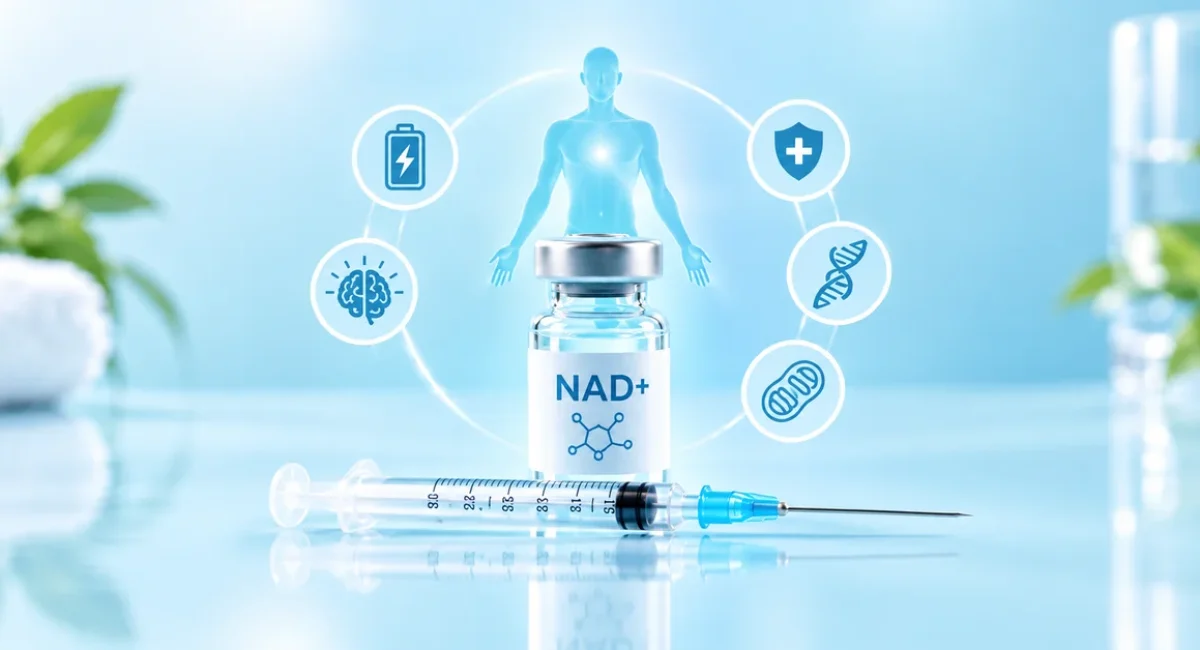
If you searched what NAD plus peptide is, you want function, not terminology. NAD+ does three jobs. It shuttles electrons through the mitochondrial pathways that generate ATP.
It serves as a required substrate for sirtuins and PARP enzymes, which govern DNA repair and gene expression. And it regulates redox balance, influencing how cells handle oxidative stress.
All three slow when NAD+ availability falls which is why one molecule gets credited with such a wide benefit list.
Why NAD+ Levels Change as You Age
The conventional account holds that tissue NAD+ declines from your twenties onward, driven by rising consumption from DNA-repair enzymes and chronic inflammation.
Newer work with rigorous sample handling has questioned whether whole-blood NAD+ truly drops with age, suggesting some earlier findings reflect collection artifacts.
Tissue-level decline remains well supported. We flag the debate because any clinic claiming the science is settled is overselling it.
How NAD+ IV Therapy Works, Step by Step
An NAD+ IV drip delivers NAD+ in saline through a catheter over 1–4 hours. Slow administration is essentially infused too quickly, NAD+ reliably triggers chest tightness, nausea, and cramping.
Your practitioner titrates the drip rate to your tolerance. Most clinics begin with a lower dose and build across the loading phase rather than starting high.
What to Expect During Your First Infusion
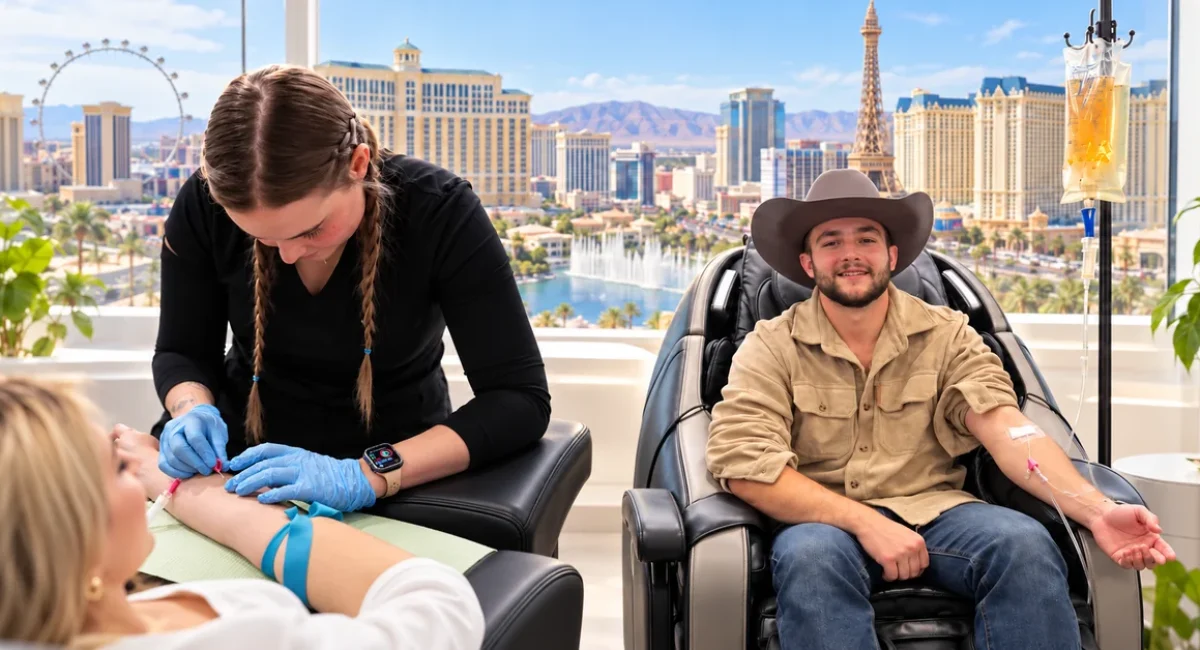
A nurse places a catheter, usually in the forearm, and starts the infusion slowly. Within minutes you may notice warmth or mild chest pressure normal, and it resolves when the rate drops.
Hydrate beforehand and eat a light meal; a 500 mg session commonly runs two to three hours, and most people work from the chair. Afterward, expect either a clear-headed lift or mild tiredness for a few hours. Both are typical first-session responses.
8 Reasons Why You Need NAD+ IV Therapy
The eight reasons below map to how NAD+ functions at the cellular level energy conversion, DNA repair, neurological signaling, and metabolic regulation. Evidence strength varies between them, so each is graded in the next section rather than presented as equally established.
- Persistent fatigue that sleep doesn’t fix supports mitochondrial ATP production directly
- Brain fog and poor mental clarity NAD+ is required for neuronal energy metabolism
- Addiction and withdrawal recovery the oldest documented clinical use, dating to 1961
- Slow recovery from training or illness supports cellular repair capacity
- Metabolic sluggishness NAD+ governs key pathways in fat and glucose handling
- Cellular aging and DNA damage sirtuins and PARP enzymes cannot function without it
- Poor absorption from oral supplements IV delivery bypasses first-pass metabolism entirely
- Chronic stress load sustained cortisol elevation accelerates NAD+ consumption
NAD+ IV vs. NAD+ Injections vs. Oral Precursors
IV infusion gives full bioavailability at the highest cost and time commitment. Subcutaneous injections offer a middle path faster, cheaper, self-administered. Oral precursors like NR and NMN are cheapest and best studied, though absorption is partial. Many patients use IV for a loading phase and oral precursors for maintenance.
| Factor | IV Infusion | Subcutaneous Injection | Oral NR/NMN |
| Bioavailability | 100% | High | Partial |
| Session time | 1–4 hours | 2 minutes | Seconds |
| Typical dose | 250–1000 mg | 50–100 mg | 250–500 mg |
| Cost per dose | Highest | Moderate | Lowest |
| Clinical trial depth | Limited | Very limited | Strongest |
| Best for | Loading phase | Maintenance | Long-term baseline |
NAD+ Benefits and Side Effects: What the Evidence Grade Actually Is
Honest grading of NAD benefits and side effects puts addiction support and cellular metabolism on the firmest ground, energy and cognition in emerging territory, and athletic performance on weak footing controlled studies in healthy adults have generally not shown performance gains. Nothing here is FDA-approved for treating any condition.
| Claimed Benefit | Evidence Grade | What We Actually Know |
| Addiction / withdrawal support | Emerging–Moderate | Longest clinical history; small trials show reduced cravings |
| Cellular energy metabolism | Strong (mechanistic) | NAD+’s role in ATP production is established biochemistry |
| Cognitive clarity | Emerging | Plausible mechanism, limited human IV data |
| Fatigue reduction | Emerging | Widely reported; few controlled trials |
| Anti-aging / longevity | Emerging | Strong animal data; human outcome data immature |
| Metabolic support | Emerging | Precursor trials more supportive than IV trials |
| Athletic performance | Weak | Controlled studies in healthy adults show no clear gain |
| Weight loss | Weak | No direct evidence; often over-claimed |
Side Effects You Should Expect (And How to Prevent Them)
Most reactions are rate-dependent and resolve when the drip is slowed: flushing and warmth, nausea, chest pressure, headache, cramping, lightheadedness, and injection-site tenderness.
The more serious concern is sourcing regulators have warned about compounders using food-grade rather than pharmaceutical-grade NAD+ in sterile injections, which carries endotoxin contamination risk, and recalls have followed.
Ask which licensed compounding pharmacy supplies your clinic. A clinic that can’t answer immediately is the wrong clinic.
NAD+ Injection Benefits for Women vs. Men
The cellular mechanism is identical across sexes, but the presenting complaints differ. Women more often seek NAD+ therapy for perimenopausal fatigue, sleep disruption, and skin quality.
Men more often present with training recovery, metabolic concerns, and midday energy crashes. Protocols are dosed by body weight and tolerance, not by sex.
NAD+ Injection Benefits for Women
Searches for NAD injections benefits for women cluster around the perimenopausal window, where shifting hormones compound with cellular energy decline to produce fatigue, disrupted sleep, and brain fog that standard panels miss. NAD+ supports the mitochondrial function underlying all three.
Skin quality is the second common driver, linked to NAD+’s role in DNA repair within dermal fibroblasts. Practical note: women with lower body mass often need a reduced starting dose and slower infusion rate.
NAD+ Injection Benefits for Men
Queries for NAD injections benefits for men skew toward performance and recovery training adaptation, soreness, and the mid-thirties drop in sustained output. Set expectations correctly: controlled research has not shown that NAD+ therapeutics improve athletic performance in healthy individuals.
What men more reliably report is faster recovery between sessions and steadier daytime energy. Metabolic support is the second driver, particularly around visceral fat and insulin sensitivity.
NAD+ Injections Before and After: A 90-Day Tracking Protocol
Nobody publishes this, and it’s the question that actually matters. Because NAD+ outcomes are largely subjective, placebo effects are substantial. Tracking four metrics across 90 days with a two-week pre-treatment baseline is the only practical way to know whether your results are real.
Run it like this:
- Weeks -2 to 0 (baseline): Score daily energy and mental clarity 1–10 each morning. Log sleep duration and one objective performance marker (steps, training volume, or work output).
- Weeks 1–4 (loading): Continue identical logging through your infusion series. Note the 48 hours post-infusion separately.
- Weeks 5–12 (maintenance): Same metrics, monthly sessions.
- Day 90 review: Compare rolling four-week averages against baseline. A real effect shows as a sustained lift, not a two-day spike.
Read it honestly. A post-infusion high that fades within 72 hours is a response to the session, not to restore NAD+ status. Sustained improvement in baseline averages is the signal worth paying for. If day-90 averages sit within a point of baseline, change the approach rather than buying more sessions.
NAD+ Dosage Per Day and Session Frequency
For NAD peptide dosage per day, note that IV NAD+ is not dosed daily; it’s dosed per session, typically 250–1000 mg, with a loading phase followed by monthly maintenance. Oral precursors are the daily option, usually 250–500 mg. Always follow a practitioner’s protocol rather than a generic number.
| Protocol Stage | Dose | Frequency | Duration |
| First session | 250 mg | Once | Tolerance test |
| Loading phase | 500–750 mg | 2× weekly | 2–4 weeks |
| Maintenance | 500 mg | Monthly | Ongoing |
| Intensive (addiction support) | 750–1000 mg | Daily | 5–10 days, supervised |
| Oral maintenance | 250–500 mg NR/NMN | Daily | Ongoing |
6 Mistakes That Waste Your NAD+ IV Investment
Most disappointing outcomes trace to process errors, not the therapy. The pattern in dissatisfied patients is consistent: one session, no baseline, no measurement, and expectations set by marketing copy rather than a practitioner.
- Booking a single session and expecting transformation protocols are built on a loading phase for a reason
- Skipping the baseline without pre-treatment data you cannot distinguish effect from placebo
- Not asking about the compounding pharmacy sourcing is the primary safety variable
- Pushing the drip rate to finish faster the direct cause of most unpleasant side effects
- Ignoring the foundations NAD+ cannot compensate for chronic sleep debt or untreated thyroid disease
- Paying for claims with weak evidence if you’re buying it for weight loss, you’re buying the wrong therapy
How to Vet an NAD+ IV Clinic Anywhere in the World
Demand is now global from NAD+ IV therapy in Las Vegas to emerging clinics across Pakistan, India, and the Gulf. Standards vary widely by jurisdiction. The vetting criteria below apply regardless of where you’re located, and matter most in markets with lighter regulatory oversight.
Ask every clinic these five questions before booking:
- Which licensed compounding pharmacy supplies your NAD+, and can I see the certificate of analysis?
- Is a physician or nurse practitioner on site for the full infusion?
- What is your protocol if I develop chest tightness or severe nausea?
- Do you screen with bloodwork and a medical history before the first session?
- What’s the written protocol doses, frequency, total duration?
A clinic that answers all five specifically is operating properly. Evasion on question one is a reason to walk.
Where NAD+ Therapy Is Heading in 2026
Three shifts are reshaping the field: intravenous nicotinamide riboside entering formal trials as a better-characterized alternative to raw NAD+; at-home subcutaneous pens moving therapy out of the clinic; and at-home NAD+ testing, which would finally let patients confirm whether they were deficient at all.
Your First 30 Days: An Actionable Starting Plan
Week 1 start your baseline log and book a consultation with bloodwork. Week 2 completes a 250 mg tolerance session. Weeks 3–4 begin twice-weekly loading while logging daily. Review at day 30 and decide on maintenance from your data, not your expectations.
Frequently Asked Questions About NAD+ IV Therapy
What does IV treatment mean?
Intravenous treatment delivers fluids, nutrients, or medication directly into a vein through a catheter, bypassing digestion entirely for full bioavailability and faster onset. Common reasons for IV therapy include hydration, nutrient repletion, medication delivery, and wellness infusions like NAD+.
Is NAD+ IV therapy FDA approved?
No. NAD+ is regulated as a dietary supplement, and injectable NAD+ has not been approved by the FDA to treat any condition. Clinics administer it as an off-label wellness therapy using compounded products. This is legal in most jurisdictions but means quality control varies by supplier.
How long does a NAD+ IV drip take?
Between one and four hours, depending on dose and your tolerance. A 250 mg introductory session may run an hour; 750–1000 mg often takes three to four. The rate cannot be rushed faster infusion reliably produces chest tightness and nausea.
Do NAD+ injections really work?
Results vary and depend on the outcome measured. Mechanistic support for cellular energy is solid, and addiction-recovery use has the longest clinical history. Claims around athletic performance and weight loss are not well supported. Track your own baseline to determine your personal response.
How much does NAD+ IV therapy cost?
Typically $250–$800 per session depending on dose and region, with loading protocols running several sessions. Subcutaneous injections cost far less. Ask for total protocol pricing, not per-session pricing, before committing.
How long do NAD+ injections last?
Subjective effects commonly persist two to four weeks after a loading phase, which is why monthly maintenance is standard. Duration varies with age, baseline status, sleep, and stress load.
What are the side effects of NAD+ IV therapy?
Most are infusion-rate dependent: flushing, nausea, chest pressure, headache, cramping, lightheadedness all resolving when the rate drops. Rarer concerns relate to product sterility. Discuss any cardiac condition, pregnancy, or medication regimen with your physician first.
Is NAD+ a peptide?
No. NAD+ is a dinucleotide coenzyme built from nicotinamide and adenine nucleotides; peptides are chains of amino acids. The phrase “NAD+ peptide” is widespread online but technically incorrect, though people using it usually mean the same therapy.
Who should avoid NAD+ IV therapy?
Anyone pregnant or breastfeeding, and anyone with significant cardiac, kidney, or liver conditions, should not proceed without physician clearance. Review interactions if you take prescription medication. NAD+ therapy is not a substitute for investigating an undiagnosed cause of fatigue.
Start Your NAD+ Protocol With Regenerate Me
You now have what other “8 reasons” pages don’t give you: an honest grade on each benefit, the side effects in advance, a dosage framework, and a 90-day method for proving whether it worked.
That’s deliberate. Regenerate Me builds IV therapy protocols around measurement rather than marketing. Every patient starts with bloodwork and a baseline, receives a written protocol with defined doses and endpoints, and reviews results at day 30 and day 90.
Our NAD+ comes exclusively from licensed compounding pharmacies, with certificates of analysis available on request.
If the eight reasons above describe where you are, the next step isn’t a booking, it’s a consultation to determine whether NAD+ IV therapy is the right intervention, or whether something else should come first.